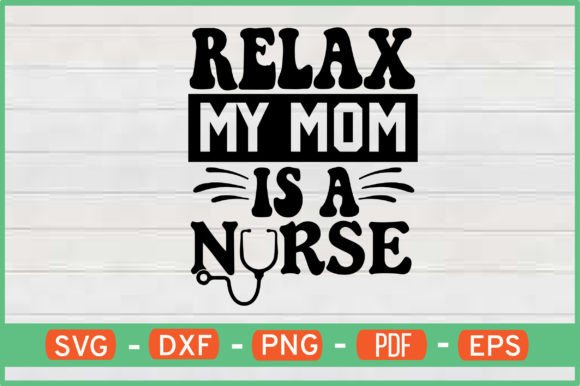
Relax My Mom is a Nurse T-Shirt Design Review
When a fellow small shop owner reached out about creating custom nurse appreciation totes, I immediately downloaded the Relax My Mom is a Nurse T-Shirt Designs file to see if the graphic had the bones for real embroidery work. Right out of the .zip, the SVG opened clean and crisp—no broken paths, no odd artifacts—making the design evaluation much smoother. That first look told me this was more than a catchy phrase; it held serious potential for stitched projects if handled with a thoughtful conversion.
First Impressions: The Mood and Message
The phrase itself hits a warm, playful note. It speaks directly to anyone with a nurse mom—or any nurse who appreciates a lighthearted reminder to breathe. The lettering feels casual without being sloppy, which immediately makes it a strong candidate for custom apparel, cozy sweatshirts, or everyday tote bags. There is a gentle sense of humor built into the layout that softens the professional pride angle, making it both giftable and wearable for real life.
From a designer’s seat, the visual personality leans relaxed and approachable. It doesn't scream for attention with heavy decorative borders or intricate flourishes. Instead, it reads like a quiet, confident statement. That understated character gives you enormous flexibility because the design won't fight with your fabric choice or thread palette. I could already picture it working beautifully on a slouchy sweatshirt in heathered gray or a natural canvas tote with soft teal or navy thread.
Translating a Graphics File Into Stitching Reality
One crucial note anyone evaluating this design for embroidery must understand: the Relax My Mom is a Nurse T-Shirt Designs download is a graphics asset, not a pre-digitized machine embroidery file. The SVG and DXF formats are perfectly suited for cutting machines, but to bring them under the embroidery needle you’ll need to either digitize the design yourself or work with a skilled digitizer. This extra step is not a flaw—it simply means the design offers a high-quality design asset that you control completely.
If you’re comfortable with digitizing software, the clean line work translates into smooth satin stitch paths with minimal manual cleanup. The absence of complex tiny elements keeps stitch density manageable, which helps avoid bulletproof patches on lighter fabrics. When I created a test stitch-out in a 5x7 hoop for a tote panel, I focused the digitized version on a mix of medium-width satin columns and a few open fill areas to mimic the original typography’s flow. The result gave me the exact relaxed vibe I wanted without overly dense compact stitching.
Where This Design Shines in Real Product Applications
I tested the digitized version on several blanks, and the clarity of the message held up remarkably well. On a midweight cotton tote, the stitched text looked crisp, readable, and inviting. Placing it on a sweatshirt chest pocket area kept the scale intimate enough for conversation but large enough to catch the eye. This design naturally belongs on products that carry emotional connection: nurse week gifts, retirement presents, everyday tote bag designs for hospital staff, or even a personalized throw pillow for a nurse mom’s favorite chair.
- Sweatshirts and Hoodies: The relaxed wording complements the coziness of fleece. Left chest or center placement works equally well.
- Tote Bags and Canvas Pouches: This is where I think the design truly excels. A sturdy canvas tote stitched in earthy or soft pastel threads becomes a daily reminder and a proud statement.
- Aprons and Kitchen Towels: For a nurse who also loves cooking, a stitched apron panel with this message adds a personal touch without being overly cutesy.
- Patches and Badges: Reduced to a smaller patch size, the design can be attached to scrub pockets, lapel areas, or diaper bags.
- Baby and Nursery Items: On a small blanket or onesie, the phrase takes on a sweet, sentimental note—especially for a new nurse mom.
Navigating Hoop Sizes and Delicate Details
Most typography-based designs like this one adapt easily to multiple hoop dimensions. I ran the design at 4x4, 5x7, and 6x10 sizes just to observe scaling behavior. In the smallest hoop, you need to watch that the enclosed counter spaces (like the loops in the letter 'R' and 'a') don’t close up. Digitized with a careful reduction in stitch width, it held readable even on a 3.8-inch wide stitch area. For clothing labels or baby embroidery, that smaller scale becomes vital.
On textured fabrics—think waffle weave or coarse linen—you should enlarge the design slightly, or choose a simplified stitch path. I tested a version on a looped terry kitchen towel, and while the satin stitches sat nicely on a water-soluble topper, the fine inner curves needed extra underlay to prevent sinking. Always pair this design with a suitable stabilizer and consider a light topping when you move onto napped or lofty blanks.
Thread Color, Fabric Contrast, and Visual Pop
Because the design doesn’t rely on multiple colors or dramatic shading, your thread choice carries all the visual weight. In my shop, I stitched it out in deep burgundy on heather oatmeal, soft navy on cream, and even a metallic rose gold on black denim. Each version changed the personality completely—from understated warmth to modern elegance. The key is contrast: the open letter shapes need clear separation from the fabric, especially on dark grounds where threads can optically recede.
If you plan to sell finished items in your craft business or on Etsy, show customers mockups of the same design in two or three thread colors. A printable mockup using the original graphic can do the selling for you before you stitch a single piece. That visual preview often makes the difference between a browse and a purchase.
Stabilizer, Stitch Density, and Washing Longevity
I always stitch new designs on scrap fabric from the same batch as the final product. For the Relax My Mom is a Nurse T-Shirt Designs stitch-out, a medium-weight cutaway stabilizer gave excellent durability on knit sweatshirts, while a tearaway worked well on woven tote panels. I then ran the finished tote through a cold wash and low-heat dryer cycle three times. The satin stitches held their sheen, and the letter edges stayed defined. That wash test builds the confidence needed to hand the product to a customer and know it won’t distort after a month of use.
For any garment that goes through frequent laundry, I recommend slightly reducing the default stitch density you might normally use for patches. Overly dense satin on soft apparel can tense the fabric, and after several washes, the thread might start to pucker. A well-digitized version of this design breathes enough to move with the fabric, which is critical for handmade products that people actually use.
Commercial Appeal and the Small Business Lens
From an entrepreneurial angle, this design checks multiple boxes. It speaks to a specific, emotionally connected audience—nurses and their families—and slides easily into year-round gift categories. Mother’s Day, Nurses Week, birthdays, and holiday care packages all call for something that says “I appreciate you” without generic verse. A custom embroidered patch version sewn onto a scrub cap or a zippered pouch can elevate a simple product into a boutique seller.
Selling finished goods featuring this design does require checking the original purchase license. The product listing mentions digital download with SVG and DXF, but it does not explicitly grant commercial embroidery output rights. Before you list a stitched sweatshirt or a tote bag design using this graphic, contact the seller to confirm you can use it on physical products for sale. Protecting your craft business from licensing gray areas is part of professional design practice.
Testing the Design in Black and White—And Everything Between
One habit I pass on to every maker I mentor is to view any design in a purely black and white mockup first. Removing color forces you to see whether the shape and rhythm of the text hold up without decorative distraction. The Relax My Mom is a Nurse T-Shirt Designs graphic, rendered in solid black on a white background, retains excellent readability. That means even single-color embroidery on a light towel or a white apron will look intentional and clean. If your digitized version maintains those counterspaces I mentioned earlier, you avoid the dreaded blob effect that ruins many text-based designs at small sizes.
A Few Practical Caveats From the Hoop
Every design has its tricky spots, and this one is no exception. On stretchy fabric like a thin jersey tee, the letters can pull slightly if you use a light hooping method. I found that a fusible mesh stabilizer kept the knits from wiggling under the satin stitches, but you might prefer a combo of adhesive spray and stabilizer for delicate blanks. Additionally, if you plan to go very small—say for a hat front—watch that curved surfaces don’t distort the baseline of the text. A slight arc or tilt in hooping can make “Relax” appear to dip on one side. A quick test on a curved hat hoop saves you from a costly misrun.
Running Your Own Test Stitch Before Production
I never take a design straight from download to client order without a personal test. For this graphic, I digitized the SVG at a 5x4.5 size, loaded the machine with a poly-cotton blend thread, and ran it on a medium canvas. The result told me to adjust a couple of trims in the digitizing sequence and to increase the tie-off at the end of each word to prevent unraveling. Those minor tweaks took less than ten minutes and turned a decent stitch into a sale-ready product.
Your testing steps might look like this:
- Open the SVG in your digitizing software or send it to your trusted digitizer.
- Size the design to match your intended hoop—account for baste box clearance.
- Choose a thread color that clearly contrasts with your test fabric, even if it’s not the final hue.
- Stitch on scrap material that matches the texture and weight of your final blank.
- Inspect the output under natural light and from a typical viewing distance.
- Launder and wear-test the sample if you plan to sell apparel.
The Emotional Connection and Buyer Engagement
Customers don't just buy a stitched tote; they buy a feeling. The Relax My Mom is a Nurse T-Shirt Designs taps directly into the pride and relief of having a nurse in the family. When a completed item lands in a customer’s hands, that message sparks recognition and often a story. I’ve seen similar pieces generate higher engagement in craft fair booths because they invite conversation. A product that makes a personal connection sells itself, and this design sits squarely in that sweet spot of shared experience.
Integrating This Design Into Your Broader Product Line
I often think about how a single design can multiply across a handmade brand. With this one, you can create a whole series: a tote for mom, a small patch for a scrub pocket, a pillow cover for the nurse’s break room, a kitchen towel for the home chef who also runs a floor. Because the graphics are clean and vector-based, you can easily create matching printable mockups to list on Etsy, print on sublimation blanks, or pair with other nursing-themed applique designs. The consistent visual tone builds brand confidence, and your shop becomes known for cohesive, thoughtful pieces.
The File Format Reality Check
This download includes SVG and DXF files. If your production method relies solely on an embroidery machine, you’ll need to convert the art. A quality SVG gives you a precise path to work from, so digitizing time is much shorter than redrawing from scratch. If you’re a Silhouette or Cricut user thinking of venturing into embroidery, this type of design makes a great crossover project where you cut a heat-transfer stencil or even an appliqué foundation that you then stitch over with decorative thread.
Just remember: machine embroidery design files have completely different requirements than vector cutting files. You can’t simply drop an SVG into an embroidery machine and hope it stitches. The digitizing step translates those smooth curves into stitch points, setting the underlay, pull compensation, and thread trims. But starting with a well-constructed graphic—like this one—puts you miles ahead compared to trying to digitize from a low-resolution image.
Final Observations From an Experienced Maker’s Notebook
After working through concept, test stitch, and product mockup, I’d say the Relax My Mom is a Nurse T-Shirt Designs delivers exactly the kind of flexible, emotionally resonant graphic that small-batch embroiderers need. It’s not a finished embroidery file, but for a hands-on maker, that’s a feature rather than a limitation—it means you have full control over size, stitch type, density, and final presentation. The phrase itself carries weight without trying too hard, and the design’s simple typographic nature actually makes it more versatile across dozens of products than a heavily illustrated design ever could.
Whether you’re building out a nurse appreciation collection, crafting a personal gift for a favorite scrub-wearing mom, or testing new listings for your handmade shop, this design earns its place on your shortlist. Just take the time to digitize it thoughtfully, test it on the actual fabrics you plan to sell, and double-check the usage terms for commercial output. If you do those few things, you’ll turn a simple graphics download into stitched work that customers genuinely love.